
Why the container type matters
Choosing the right container affects how much cargo you can ship, what it costs, and how safely the goods travel. Most commercial shipments use a small number of common types, covered here.
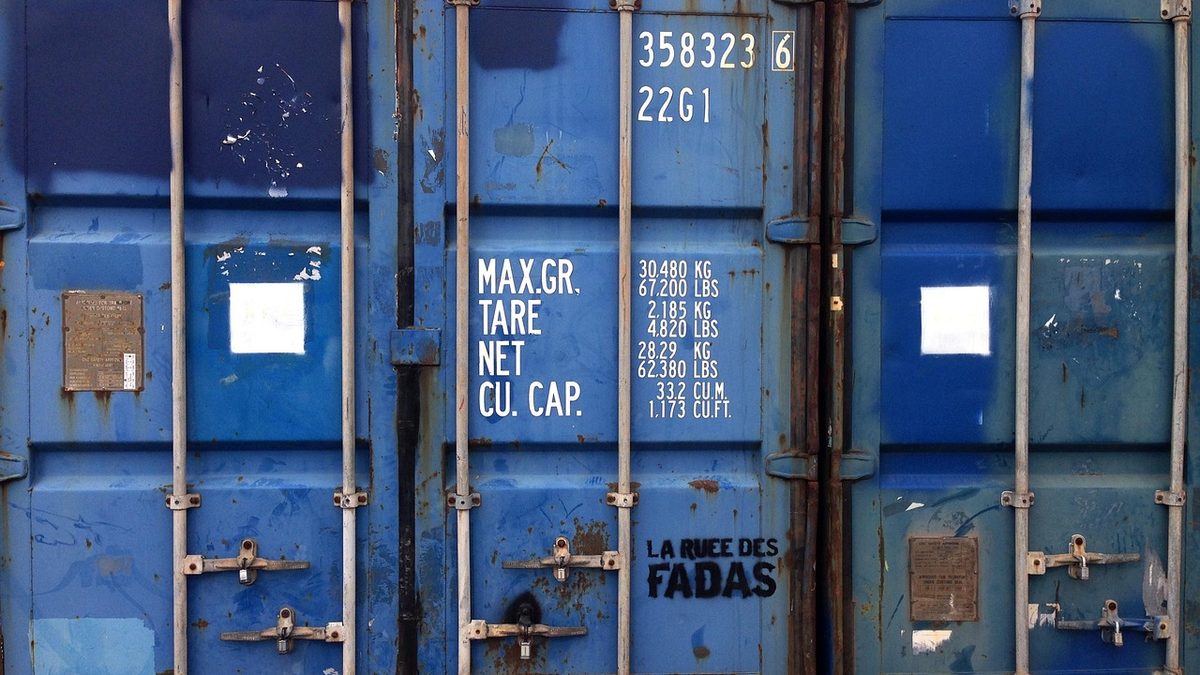
Important note: the dimensions and weights below are approximate and vary slightly by manufacturer and shipping line. The final reference is the carrier's specifications and the data plate on the container door.
Standard 20ft container
The smallest common standard container, about 6 metres long on the outside.
- Internal capacity: about 33 cubic metres.
- Suits: cargo that is heavy for its volume, such as metals, ceramics and some raw materials, because the container reaches its weight limit before it fills up.
- Typical code: usually starts with 22, such as 22G1.
Standard 40ft container
Roughly twice the length of the 20ft, about 12 metres on the outside.
- Internal capacity: about 67 cubic metres.
- Suits: lighter, bulkier cargo, such as furniture, clothing and home appliances.
- Note: its maximum weight is not much higher than a 20ft container. It doubles the volume, not the weight.
40ft High Cube
The same length as a 40ft container, but about 30 centimetres taller.
- Internal capacity: about 76 cubic metres.
- Suits: light, high-volume cargo and goods that are tall.
- Typical code: usually starts with 45, such as 45G1.
Refrigerated container (Reefer)
An insulated container with a refrigeration unit that keeps a set temperature throughout the voyage, usually available in 20ft and 40ft lengths.
- Suits: fresh and frozen food, and some medicines and temperature-sensitive goods.
- Note: its internal capacity is smaller than a standard container of the same length because of the insulation and the refrigeration unit, and it costs more.
Special types
- Open Top: for tall cargo loaded from above by crane.
- Flat Rack: without side walls, for large equipment and machinery.
- Tank: for liquids.
What to check before booking
- Weight before volume: make sure the cargo weight does not exceed the container limit, or the road transport limit at destination.
- Internal dimensions: especially the door opening if the cargo is long or palletised.
- Stowage: the number of pallets that actually fit depends on their size and arrangement, not only on theoretical capacity.
- Ask your forwarder: about availability of the type you need at the port of loading, and the cost.
Track your container whatever its type
Whatever the container type, it is tracked by its number. Read Container Numbers Explained to learn how to read the size and type code on its door. In Big Chains you add the container number once, and the platform follows it for you until arrival.